What online learning platform to choose in 2026? It is quite a daunting task with many available online learning platforms around. The best platform would depend on specific goals, for instance, whether or not someone wants to learn new skills, create courses or sell them to a larger audience. By knowing the differences between types of platforms, it will become much easier to make the choice. In recent years, online learning has grown rapidly. Course creators can now build, host and sell content more efficiently than ever before whereas learners can gain skills of their choice.
Key Takeaways
- Online learning platforms offer clear benefits for both learners and course creators.
- Different types of platforms serve different needs, from personal learning to corporate training.
- Comparing top platforms helps users choose the right tool for their specific goals.
Key Benefits of Online Learning Platforms?
In 2026, there are several benefits of Online Learning Platforms for Learners and Course Creators. These benefits are the reason why more and more people are opting for digital learning rather than classroom learning.
For learners:
- Flexibility. Learners can study at their own pace and pick times that fit their schedule.
- Lower cost. Most online courses cost less than in-person classes or degree programs.
- Wider access. Anyone with internet access can join courses from any location.
- More choices. Learners can pick from thousands of topics and skill levels.
- AI-driven support. Many platforms now use AI to recommend courses and track progress.
For course creators:
- Passive income. Creators can sell a course once and earn money from it repeatedly.
- Global reach. A single course can reach students in different countries at the same time.
- Simple setup. Platforms like Udemy handle hosting, payments, and marketing tools.
- Data insights. Creators get feedback and analytics to improve their content over time.
| Benefit | Learners | Creators |
|---|---|---|
| Cost | Lower fees | Low startup cost |
| Time | Self-paced | Passive income |
| Reach | Global access | Global audience |
| Tools | AI recommendations | Analytics and marketing support |
Because of these benefits, online learning platforms can be a practical choice for people who want to either learn something new or teach others.
What Do Online Learning Platforms Do?
Courses to learn new skills for personal or career advancement are available through the online course platforms. These tools empower creators to design, publish and sell their courses without a website or technical know-how.
These platforms handle several key tasks:
- Content hosting: They store videos, quizzes, downloads, and other course materials in one place.
- Payment processing: They collect payments from learners and pay creators, often after taking a small fee.
- Marketing support: Many platforms help creators reach new learners through built-in search tools, email campaigns, or affiliate programs.
- Student tracking: They monitor learner progress, quiz scores, and course completion rates.
- Certification: Some platforms issue certificates when a learner finishes a course.
By 2026, nearly all platforms were utilizing AI to enhance the learning experience. AI tools can provide learners with the suggestions of the course based on their interest, create questions for quizzes, or give instant feedback on assignments. These platforms are used by learners to get access to courses for nearly any subject.
They are able to read reviews, compare prices, and select a study rate that has a fit with theirs. Course designers, on the other hand, utilise them to make money with their knowledge. Instead of running their own website, they use the platform’s resources to reach students across the globe. Overall, online learning platforms are like a bridge. They link those ready to tutor to a learner while managing the technical and business details in between.
What Are the Key Different Types of Learning Platforms
Online learning platforms in 2026 come in several forms. Each type serves a different need for course creators and learners.
Course marketplaces like Udemy let anyone create and sell online courses to a large built-in audience. They handle payment processing and marketing but take a percentage of sales.
Standalone platforms give course creators their own branded website. These tools offer more control over pricing, branding, and student data than marketplaces do.
Learning management systems (LMS) focus on structured education. Schools, universities, and companies often use these for training programs and formal courses with grading and tracking features.
Cohort-based platforms run live, scheduled courses with groups of learners. Students move through the material together instead of learning at their own pace.
AI-powered platforms use artificial intelligence to personalize lessons. They adjust content difficulty, suggest resources, and track progress based on how each learner performs.
Here’s a quick comparison:
| Platform Type | Best For | Example Feature |
|---|---|---|
| Marketplace | Reaching new students | Built-in audience |
| Standalone | Brand control | Custom website |
| LMS | Formal training | Grading tools |
| Cohort-based | Live interaction | Group scheduling |
| AI-powered | Personalized learning | Adaptive content |
Some platforms also offer free online courses to attract users before charging for premium content. Choosing the right type depends on the creator’s goals, budget, and audience size.
All-in-One Course Platforms (SaaS)
Platforms for all-in-one courses take care of almost all parts of course creation and sales in one place. Making marketing tools. And student management. All part of one system. Hosting. Payment processing. Creators of courses are not required to establish unique tools or code.
Software as a service is what these platforms run as. Users pay a normal or yearly fee which allows them to access the facility. They get updates, support, and hosting without having to manage servers.
Common features found on these platforms include:
- Course builders with drag-and-drop tools
- Payment gateways for handling transactions
- Email marketing integrations
- Student progress tracking
- Certificates for course completion
- Community features like discussion boards
Teachable, Thinkific, and Kajabi are examples in 2026. Although each one offers the same basic tools, they differ in pricing and design options and more advanced add-ons. Many creators choose this model because they want to take more control. All-in-one platforms let sellers set their prices and keep most of their profits unlike marketplaces like udemy.
Their student data and email lists also belong to them. Individuals who want to build a long term business around their courses find this setup suitable. RephraseMoreUndoWhile creating a standalone online store requires more effort than a marketplace one, it gives sellers control over pricing. Costs fluctuate significantly. Depending on the platform, their monthly subscription ranges from as little as $30 to over $300 for more advanced plans
MOOC Platforms
MOOC is an acronym for Massive Open Online Course. These platforms offer courses to the large-scale audience at a time for free or at a low cost. Numerous MOOC platforms originated through collaboration with universities and colleges. In 2026, academics are still taught in schools, but students are also taught coding, marketing, data science, among others.
Common features of MOOC platforms:
- Free access to course videos and readings
- Paid certificates for those who want proof of completion
- University-level content taught by professors or industry experts
- Self-paced or scheduled course formats
Some popular MOOC platforms include:
| Platform | Known For |
|---|---|
| Coursera | University partnerships, certificates, degree programs |
| edX | Free courses, academic rigor |
| FutureLearn | Short courses, UK-based universities |
| Khan Academy | Free K-12 and early college content |
MOOC platforms are for you if you want structured learning at no big financial cost. Such activities often include quizzes, peer discussion boards, and deadlines to keep learners on track. These platforms are not like marketplace (Udemy) Unlike typical Massive Opened Online Course platforms who let independent instructors create courses, the ones mentioned earlier work with schools or companies to create the content. By 2026, MOOC platform tools will help students grade assignments and provide feedback instantaneously. Some sites also use AI to recommend courses based on a learner’s goals or what they’ve done. The MOOC certificates carry weight for learners wishing to prove their skills for a resume or job application. This is due to their links with known universities.
Open-Source LMSs (WordPress)
Open-source learning management systems (LMS) let creators build and fully control their platform. The most popular choice for this in 2026 is WordPress. Creators install a plugin on their own WordPress site to turn it into a course platform.
For this setup, LearnDash and Tutor LMS are among the top plugins. Both allow users to create lessons, quizzes, and drip content. They additionally endorse memberships and certificates. We recommend this option for those who have an existing WordPress website. It is also ideal for anyone wanting to avoid the ongoing fees of a hosted platform, such as Udemy or Teachable.
Key benefits include:
- Full ownership of course content and student data
- No revenue-sharing fees with a third party
- Flexible design and branding options
- Access to thousands of WordPress plugins for added features
Some trade-offs to consider:
- Creators must handle hosting, security, and updates
- Technical setup can be harder for beginners
- No built-in audience like marketplace platforms offer
Open-source LMSs are great for creators wishing for long-term control over their business. Additional preparation is needed from the outset. However, they eliminate the restrictions imposed by hosted platforms.
Course Creators Who Want to Grow Fit Well on This Path. It also helps those building brands outside a marketplace. Numerous businesses and educators use this technique to have control over their decisions concerning pricing and content.
Enterprise and Corporate LMSs
Enterprise and corporate learning management systems (LMS) aren’t built for the same purpose as those meant for course creators. The emphasis is on training people, monitoring compliance and building skills in large teams.
Businesses utilize them for hiring and training employees and for legal requirement compliance. By the year 2026, many of the organizations are employing an AI that suggest courses based on an employee’s role or skill gaps. HR teams can save time with automated training, while workers can find suitable training programs.
Common features include:
- User management: Tools to organize employees by department, role, or location
- Reporting and analytics: Dashboards that show who finished training and who didn’t
- Compliance tracking: Automatic reminders for required courses, like safety or ethics training
- Content libraries: Access to prebuilt courses on topics like leadership or software skills
- Integration options: Connections to HR systems, payroll, and other business software
Famous names in this space include Cornerstone OnDemand and SAP SuccessFactors and Docebo. These platforms usually charge based on the number of seats in the system, namely employees.
The price is usually high compared to consumer platforms like Udemy. Businesses that pay extra money can access extra support and security features, and also customize training content to their brand. Corporate learning management systems take data privacy seriously. Since this information contains records of employees and performance, it is carefully stored and restrictive in how it is shared.
iSpring Learn
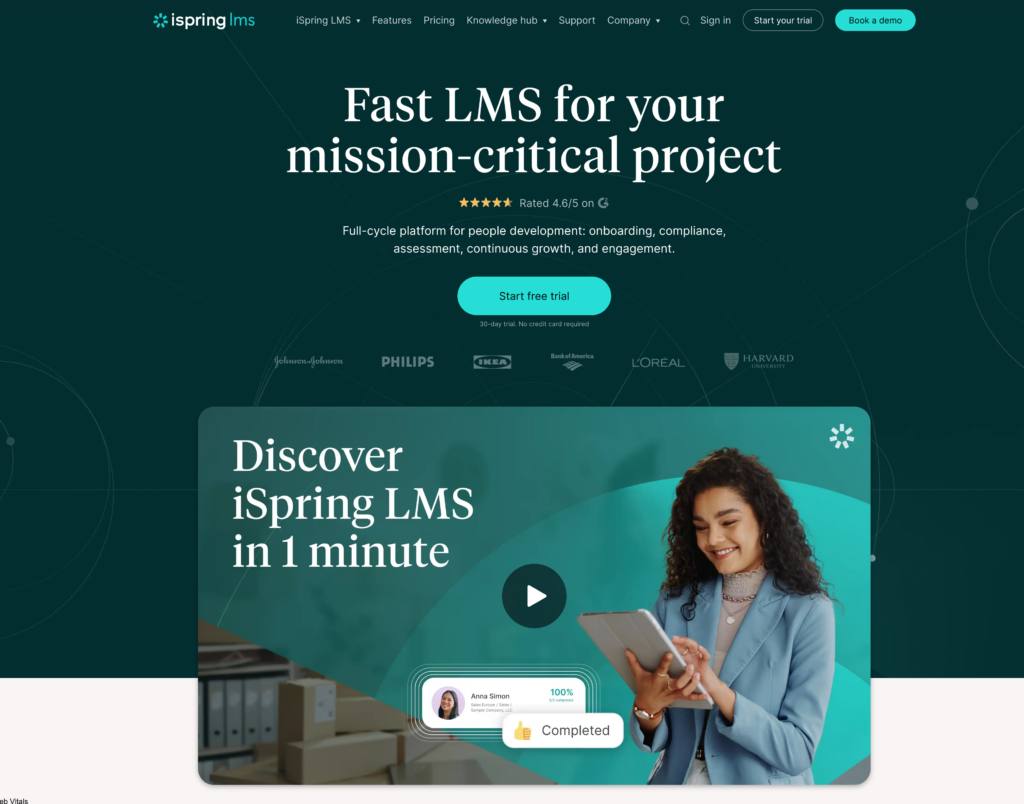
iSpring Learn is a learning management system built for businesses that need to train employees quickly. It focuses on simple course creation and fast deployment rather than public course sales.
Course creators can build training modules using PowerPoint-style tools. This makes it easy for teams without technical skills to produce content.
Key features include:
- Quick course authoring with the iSpring Suite add-on
- Mobile app access for learners on any device
- Built-in quizzes and assessments
- Detailed reporting and progress tracking
- Support for SCORM-compliant content
The platform is suitable for companies that have existing training content that they would like to digitize. Does the support for media present other formats? The iSpring Learn platform does not act as an intermediary between creators and public audience as does Udemy or a similar marketplace. Rather, it is used as a training facility for employees or partners associated with a company.
Monthly active users determine the pricing of our offerings. For larger teams, this system works well but may get expensive for big organizations. 2026 sees iSpring Learn continue adding AI-based features. Tools that highlight learning gaps are called smarter reporting tools and suggestions of content.
The interface is basic, and it doesn’t take long to set up. New administrators can launch their first course within hours of their registration. For organizations that offer internal digital training instead of selling courses to the public, iSpring Learn is undoubtedly a sensible and reliable option among the online learning platforms.
Docebo
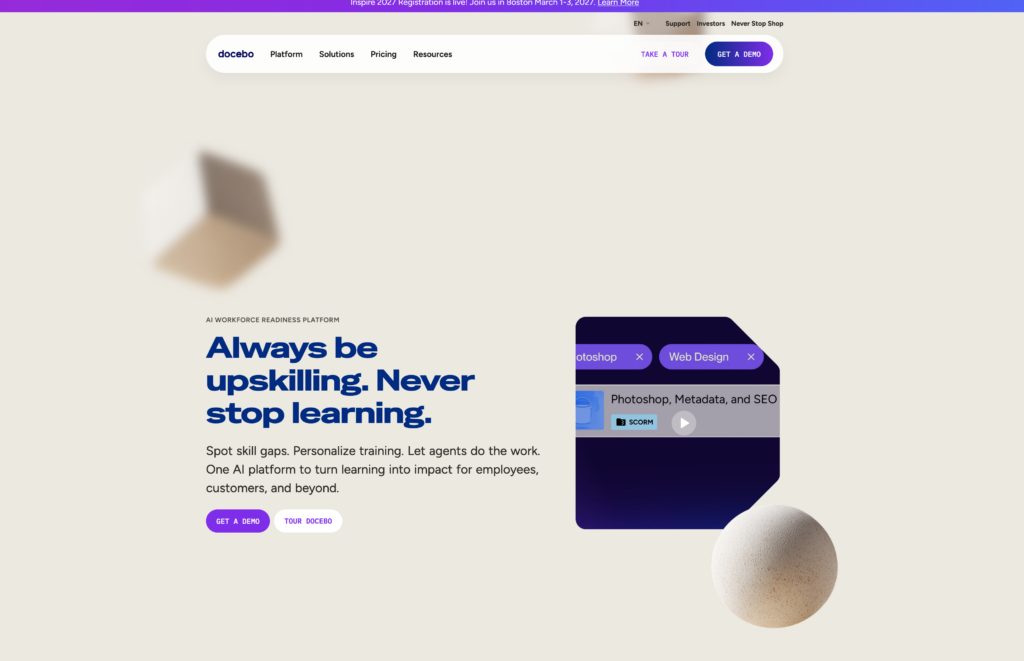
Docebo is a learning platform that is meant for businesses to have the ability to train employees. The software harnesses AI to assist companies effectively in managing huge amounts of training content and delivering it to the right individuals. Docebo is an ideal choice for bigger businesses. It specializes in training professionals rather than selling courses to the public.
Key features include:
- AI-powered content suggestions
- Automated course assignments based on job roles
- Detailed reporting and analytics
- Support for multiple languages
- Mobile app for learning on the go
- Integration with other business tools like Salesforce and Microsoft Teams
AI tools from Docebo help admins save time. The system can recommend content, tag skills and even automatically create some training materials. This reduces the training team’s manual workload. It also caters to various types of learning. Organizations provide structured courses, collaborative forums, and ad hoc learning via resource sharin in various ways. Prices are not available in public.
Only Docebo will provide a quote based on the size and needs of your business. For small teams or individual course creators, it makes it a bit harder to know in advance if it fits their budget. Docebo is ideal for companies that have training content already, but want a system to organize and track it. It’s not meant for individuals who wish to create and sell courses from the ground up. You may get better results from other platforms for that.
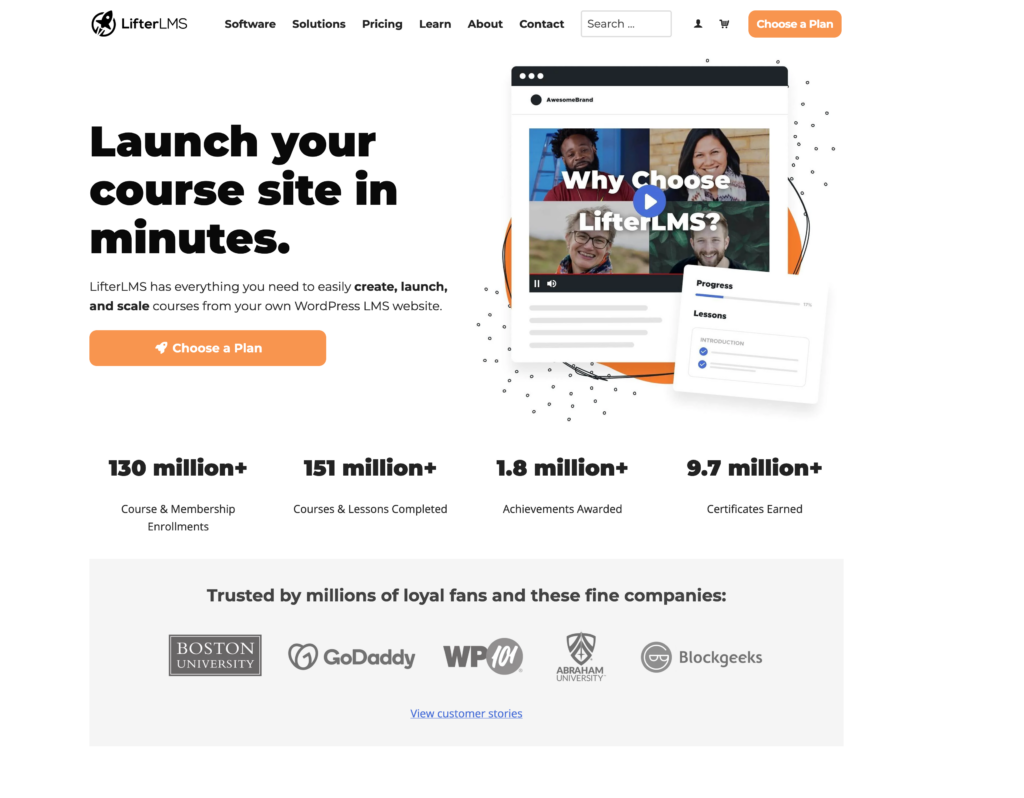
LifterLMS plugin changes the WordPress site into a full-fledged online learning platform. It gives course creators control over their content, branding and student data since everything runs on their own site.
This website is ideal for anyone already using WordPress or who wants extra control that hosted platforms such as Udemy don’t allow.
Key features include:
- Drip content scheduling to release lessons over time
- Quizzes and assignments to test student progress
- Membership site tools for recurring revenue
- Certificates and badges for course completion
- Payment gateway support, including one-time and subscription pricing
LifterLMS integrates with other email marketing tools and payment processors. Consequently, this creates an easier implementation of a full sales funnel around a course.
Pricing operates differently than most hosted platforms. Users pay for the plugin along with any necessary add-ons instead of monthly fees based on student numbers. There is a free version for users who just need basic features, while paid plans will allow you to access additional tools to help you market and sell online courses.
Users of LifterLMS should be somewhat technically comfortable as it runs on WordPress. Setting up hosting, selecting a theme and managing plugins can be strenuous relative to a hosted site.
Many people who want to own their own learning platform will choose LifterLMS in 2026. This option is suitable for creators who want to build a sustainable business while retaining full control of pricing, branding and their relationship with students.
TalentLMS
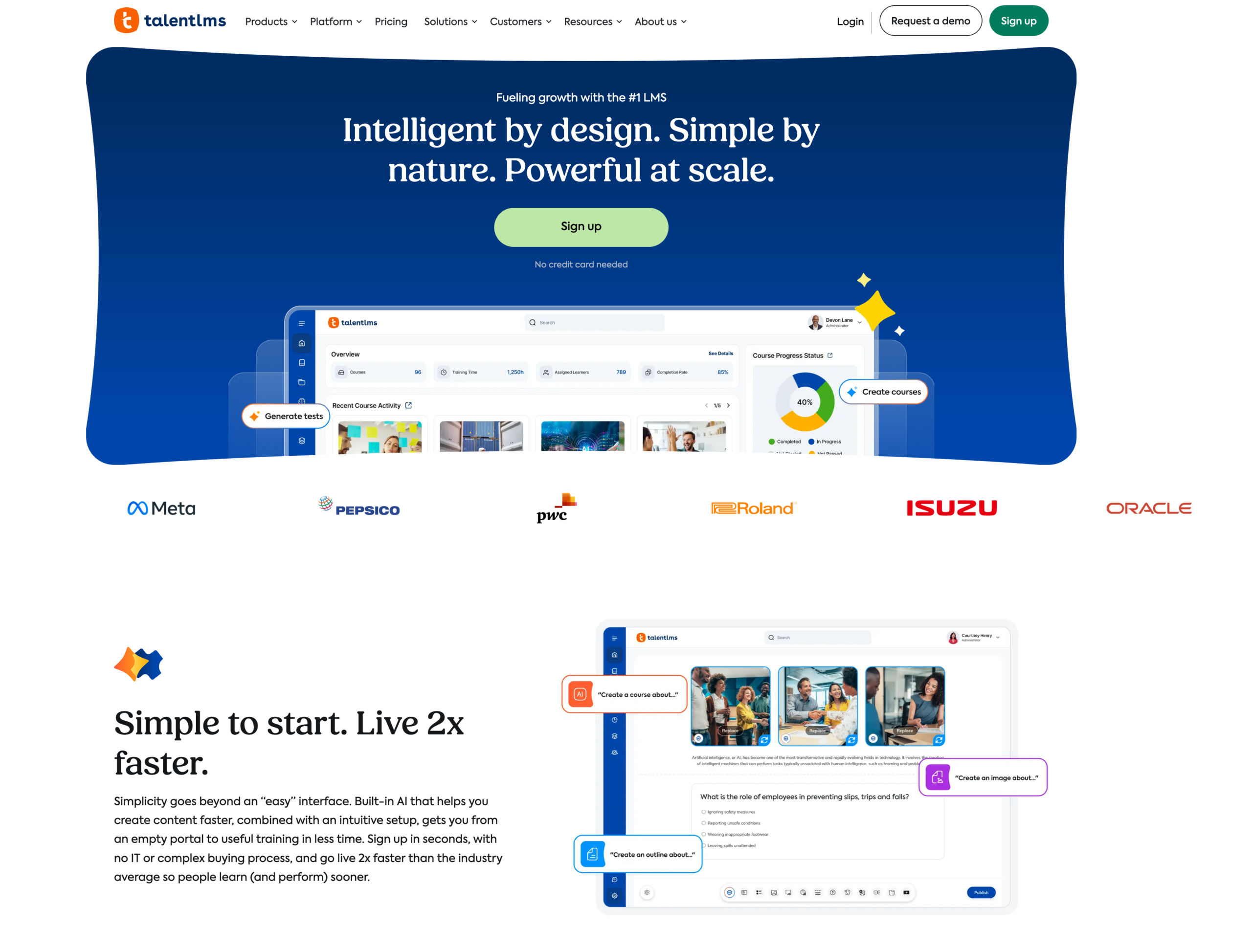
TalentLMS through its designed and development focuses on helping users in training their employees and customers workforce. It emphasizes straightforward setup and easy course generation, an admirable fit for teams without too much technical expertise.
The platform allows users to create courses that include text, videos, quizzes, and more. Businesses are also able to upload existing items like PowerPoint files or PDFs to make online courses.
TalentLMS provides tools to monitor learner’s performance. The built-in reports offer managers insights into completion rates, scores, and time taken for each course.
Some standout features include:
- Gamification tools like badges, points, and leaderboards to keep learners engaged
- Custom branding so courses match a company’s look and feel
- Multi-language support for teams working across different countries
- Mobile access through apps for both iOS and Android
TalentLMS is a good fit for teaching new hires, compliance, and skill training as your organization continue to grow. The selling courses SaaS app is also useful for businesses that want to sell paid training to outside customers.
Pricing is determined by the number of active users. There is a free plan for small teams just getting started. Paid plans opens up more storage, advanced reporting and more customization options. In 2026, TalentLMS continues to be a solid choice for companies that require a launch-ready LMS with little IT support burden. It is designed for corporate training instead of a course creator to sell to the public.
Moodle
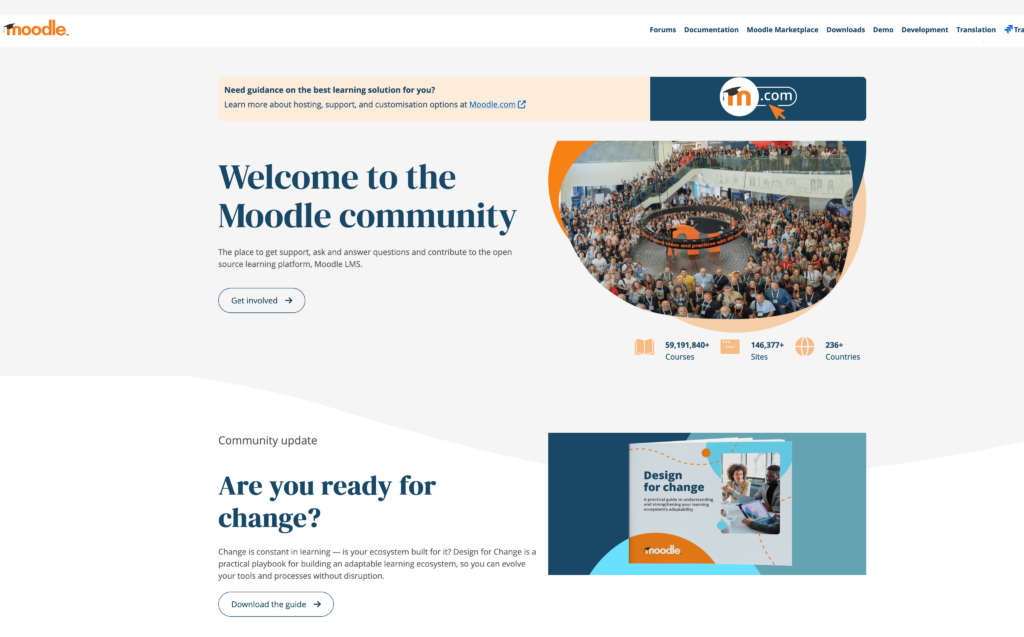
Moodle is a popular learning platform that is free and open-source software. Course creators have complete autonomy over the construction and functioning of their courses. Moodle doesn’t charge licensing fees unlike most paid platforms. Users can download the software to host it themselves or pay a third party to host it for them.
Key features include:
- Custom course design with quizzes, forums, and assignments
- Support for multiple languages
- Grade tracking and reporting tools
- Plugins that add extra functions, like video conferencing or AI-based feedback
- Mobile app access for learners on the go
In 2026, Moodle continues to add AI tools that help teachers grade work faster and give students personalized feedback. This keeps it competitive with newer platforms that focus heavily on automation.
People who desire flexibility and flexibility without a steep learning curve like using Moodle. Getting it up and running requires more technical know-how than Udemy, as users typically have to look after their own hosting and updates.
This is an effective solution for course creators who’d like to sell or host content without paying a proportion of sales to a marketplace. Also, schools and training institutions use it to manage many learners in one place.
Moodle may appear to be a more complex system than the novice user requires. There are many online learning platforms available today, but for organizations needing control and scalability, this one is still one of the most popular choices in 2026.
Kajabi
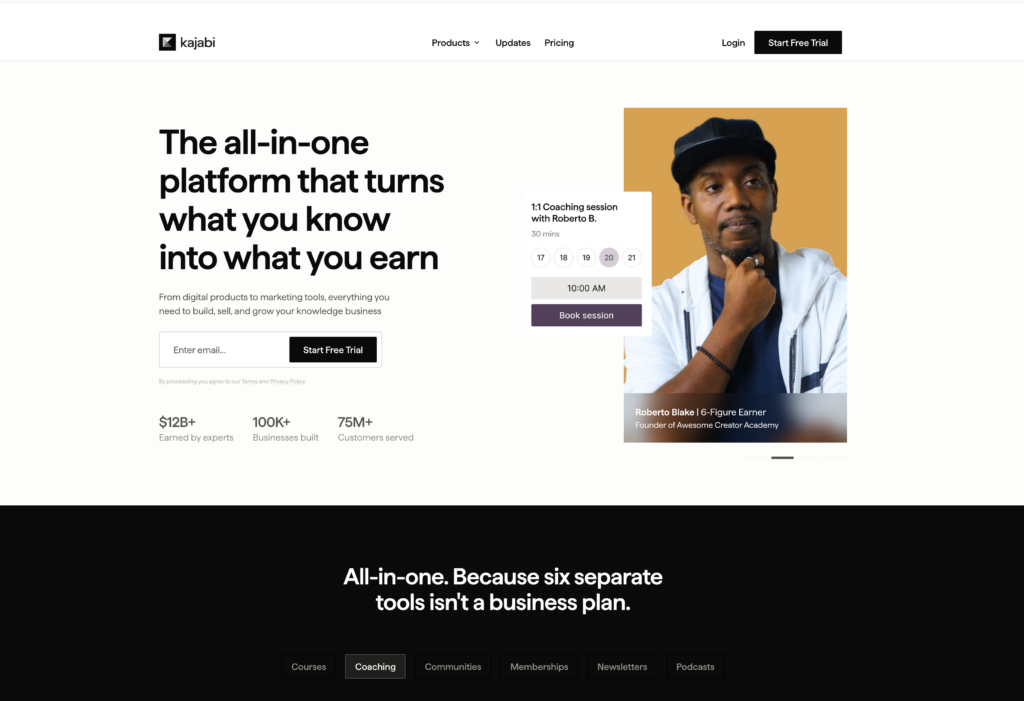
Kajabi is an all-in-one platform built for course creators who want to run their entire business in one place. The software is an all-in-one platform that allows you to build and sell online courses. This platform works wonders for creators who don’t want to use multiple tools. All that you need can be found in Kajabi, instead of using a separate web software for landing pages, email list and payment collection.
Key features include:
- Course builder – drag-and-drop tools for organizing lessons and modules
- Marketing automation – email sequences and sales funnels
- Website themes – customizable templates without needing a developer
- Membership sites – options to create ongoing subscription content
- Analytics dashboard – tracks sales, student progress, and engagement
Kajabi charges a monthly fee rather than taking a percentage of sales. As of 2026, pricing starts around $89 per month for the basic plan, with higher tiers unlocking more features and higher revenue limits.
Kajabi charges on a monthly basis instead of taking a cut from sales. The basic plan will start at $89 per month in 2026, with higher tiers unlocking more features and higher revenue limits.
This pricing strategy is ideal for creators that have an audience in mind and consistent sales. New content creators with no current audience may find it harder to justify the cost initially. Unlike Udemy, the platform lacks a built-in marketplace feature.
The implication is that creators need to have their own marketing, social media, and paid ads for traffic. Creators in search of full control over branding and pricing will suit Kajabi. It saves time for people who run a course business full time, as there are no third-party tools.
LearnDash
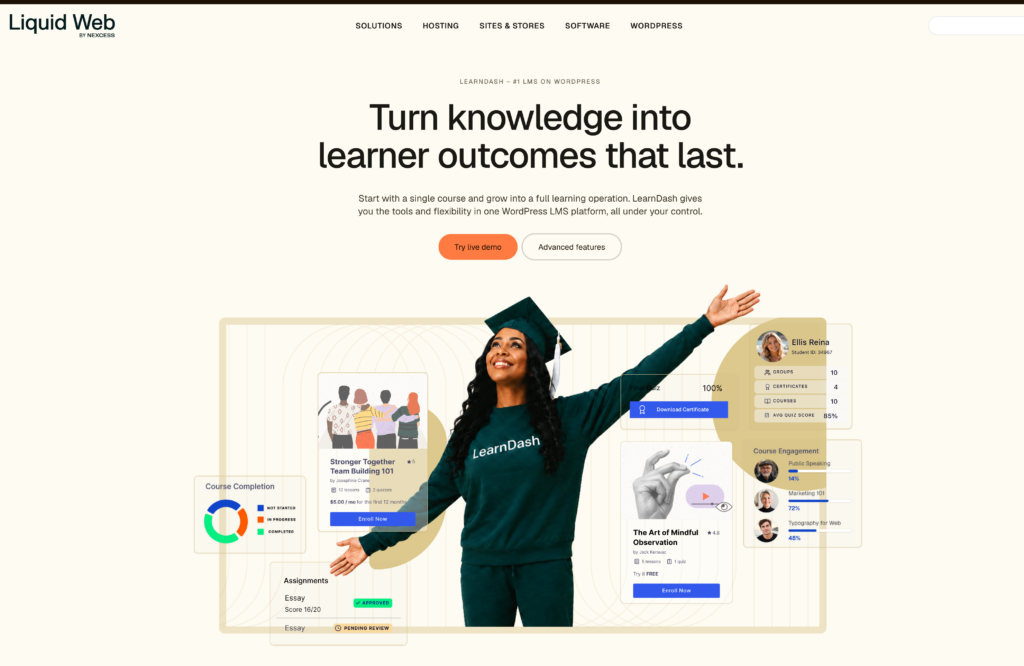
LearnDash is a WordPress plugin for creating and selling online courses on your site. This is a suitable option for course creators who already have a WordPress site or want more control over branding and design. LearnDash offers full ownership of content and student data to creators unlike hosted platforms like Udemy. This is a great solution if you want a custom online course platform to use for your business or educational institution.
Key features include:
- Course builder with drag-and-drop tools
- Quizzes and assignments to test learner progress
- Certificates that generate automatically after course completion
- Membership and subscription options for recurring income
- Drip content that releases lessons on a set schedule
You can also integrate LearnDash with email marketing tools, payment gateways, and CRMs. It makes it easier for the course creator to run their business.
In 2026, content suggestions and automated quiz generation are some of the enhanced features offered by LearnDash. These new improvements do just that, freeing up creators’ time.
LearnDash needs a WordPress site which adds a layer of technicality to setup as compared to beginner-friendly platforms. It gives seasoned users greater liberty in adjusting their online learning platform.
Licensing fee is one-time or annual, not revenue share. The creator of this material, who wants to sell their online courses at scale, is not charged a fee per sale.
In 2026, LearnDash is not going anyway. Even though WordPress LMS options have grown in quantity, LearnDash remains an attractive option for anyone who wants a self-hosted, flexible digital learning platform.
EzyCourse
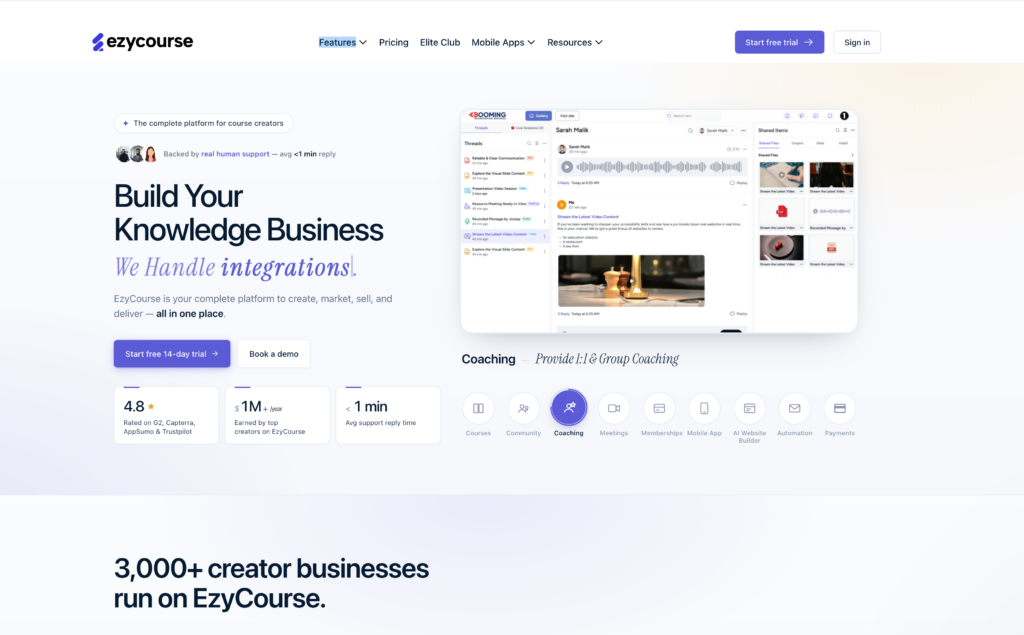
EzyCourse is an Online Learning Platform Created for People Who Want To Create & Sell Online Courses. It offers course builders the methods to construct, publicize and handle their material on a single platform. The platform offers more than just course hosting features. Creators can develop a complete online school using it instead of merely a course page.
Key features include:
- Website builder with customizable templates
- Support for video, quizzes, and downloadable files
- Built-in email marketing tools
- Membership and subscription options
- Live class scheduling
- Mobile app access for learners
Additionally, EzyCourse has AI-powered tools that allow creators to write course descriptions faster. It can help save time for new course builders. Pricing is often considered one of the platform’s strengths. EzyCourse free plan with basic features makes it easier for new creators to start without any upfront costs. Paid plans give access to greater number of tools to help e.g. marketing and more.
EzyCourse offers creators more flexibility with pricing and branding than similar platforms like Udemy. On Udemy, the platform sets most of the pricing rules. They can add their own branding, info, and anything else to customize their course, with no extra fees.
This makes EzyCourse a good choice for creators who want a branded learning platform rather than having the courses listed on a marketplace with competing courses.
Frequently Asked Questions
In their quest for online course platforms in 2026, people often have questions regarding pricing, certificates, and the impact of AI Tools on the quality of courses people create. You will find below answers to the frequently asked questions about platform selection and course business building.
What are the top online learning platforms in 2026?
Udemy, Coursera, and Teachable remain the best options of 2021. Different types of user are served by each one. Udemy is best for creators seeking built-in traffic and a larger audience of learners. Coursera is focused on partnerships with universities and structured degree programs. Creators can have more control over pricing and branding with Teachable and Thinkific. Kajabi meets the needs of course creators with hosting and marketing tools.
Which platform is best for creating and selling online courses?
Both Teachable and Thinkific are solid choices for course creators who want to maintain full ownership of their content and pricing. Both let creators set their own prices without competing with marketplace discounts.
Kajabi is an all-in-one system for creators who need courses, email marketing, and landing pages. Udemy is the ideal choice for creators who want less setup work for their courses and do not mind a lower revenue per sale. How Creators Decide Between Control and Convenience; What’s the Right Choice?
Are online courses still profitable for course creators in 2026?
Of course! But your profits depend on the niche you choose, and your marketing effort. Course creators selecting a specific topic, such as a software tool or job skill, earn more than creators with broad topics. The sales of a course whose creators are able to build an email list or social media following first are more. Teachable or Thinkific have lower fees which means creators have to give away less revenue per sale than marketplace platforms.
What features should learners look for in an online course platform?
Learners should check for mobile access, downloadable resources, and clear course previews before buying. A platform with a mobile app makes it easier to learn during commutes or breaks.
Other useful features include:
- Progress tracking across devices
- Community forums or Q&A sections
- Closed captions or transcripts
- Flexible refund policies
These features affect how easy it is to finish a course and apply what was learned.
Which online learning platforms offer recognized certificates?
The certificates on Coursera come from universities and companies like Google and IBM. Certificates that are associated with these known institutions do carry weight with employers. Certificates earned through LinkedIn Learning will automatically appear on a learner’s LinkedIn profile. Udemy certificates may show you have completed a course though they are not regarded as highly as certificates from a university or big company.
How is AI changing online learning platforms in 2026?
AI helps create outlines, quizzes and video captions faster than a manual approach does. Several platforms utilize AI to recommend a lesson structure according to what a creator enters. AI chatbots help the learner check if he/she has any doubts regarding the content of the course in real-time. Some platforms also adopt AI to suggest courses based on a learner’s past activity or career ambitions. This assists in limiting data collection from substantial course catalogs.
Final Thoughts
Choosing an online learning platform in 2026 comes down to a few clear priorities. The right choice depends on goals, budget, and audience size.
Key factors to weigh:
- Purpose: learning a new skill versus selling courses to others
- Budget: free platforms versus paid tools with more features
- Audience: small groups versus large-scale course creation
- AI tools: platforms that offer smart features for content creation and student support
F Low-cost or free platforms often work well for learners. They allow access to a huge range of topics at a low cost.
The decision for course creators is more complex. When you sell a course, you need certain basic tools.
Popular online course platform Udemy has a large user base. But now, newer platforms offer better control over pricing and branding.
AI have totally revolutionized the functioning of platforms. Nowadays, many people rely on AI for grading assignments, answering student questions, and suggesting content tweaks.
The ideal business platform will differ from person to person. A hobbyist learner has different needs than someone building a full time business around course sales.
It is wise to test a few before committing. Most platforms have free plans or free trials.
The online education environment will keep altering. It is a sound approach for both learners and creators to stay flexible and change tools as better ones appear.