Summary
When considering what the best community platform is for 2026, you first need to define community and examine your use case to see if it fits. In WP-Tonic terms, you typically hear us blend community with online courses. While the two niches serve each other very well, community is, in fact, a very separate concept. Another factor that needs to be assessed is the modality in which you intend to give people access to the community. In this post, Jonathan breaks down the best community tools from our perspective.

What’s the BEST Community Platform in 2026?
The online course industry continues to expand in 2026, with platforms offering varied approaches to course creation, hosting, and sales. The best online course platform depends on specific needs—whether launching a first course, scaling an existing course business, or delivering internal training… or not hosting courses at all. Each platform type serves different goals and technical requirements.
Creators can choose from software-as-a-service platforms that handle all technical aspects, WordPress LMS plugins for site owners, public marketplaces with built-in audiences, community-focused membership platforms, or enterprise learning management systems. Some platforms charge monthly fees while others offer free tiers with limited features. Understanding the differences between these options helps course creators select the right foundation for their online learning business.
This guide examines the top platforms across each category, comparing features like course delivery tools, payment processing, student management, and pricing structures. The analysis covers both established solutions and newer platforms that have gained traction in 2026.
SaaS Course Platforms
SaaS (Software as a Service) course platforms offer all-in-one solutions for creating, hosting, and selling online courses through a subscription-based model. These platforms handle technical infrastructure, payment processing, and course delivery while creators focus on content.
Kajabi

Kajabi positions itself as a premium all-in-one platform for course creators who want advanced marketing tools alongside course delivery. The platform includes email marketing, landing pages, sales funnels, and website building capabilities within a single dashboard.
Pricing starts at $149 per month for basic features, with higher tiers unlocking additional products, contacts, and advanced automation. The platform supports unlimited courses, students, and bandwidth across all plans.
Kajabi excels in marketing automation with native email sequences, campaign tracking, and conversion analytics. Course creators can build complex sales funnels without third-party integrations. The platform also includes a mobile app for students and community features for member engagement.
The interface requires a learning curve due to its extensive feature set. New users typically need several weeks to master the platform’s capabilities. Technical support includes 24/7 chat and extensive documentation.
Prices Basic $179 | Growth $249 | Pro | $249 per month
LearnWorlds
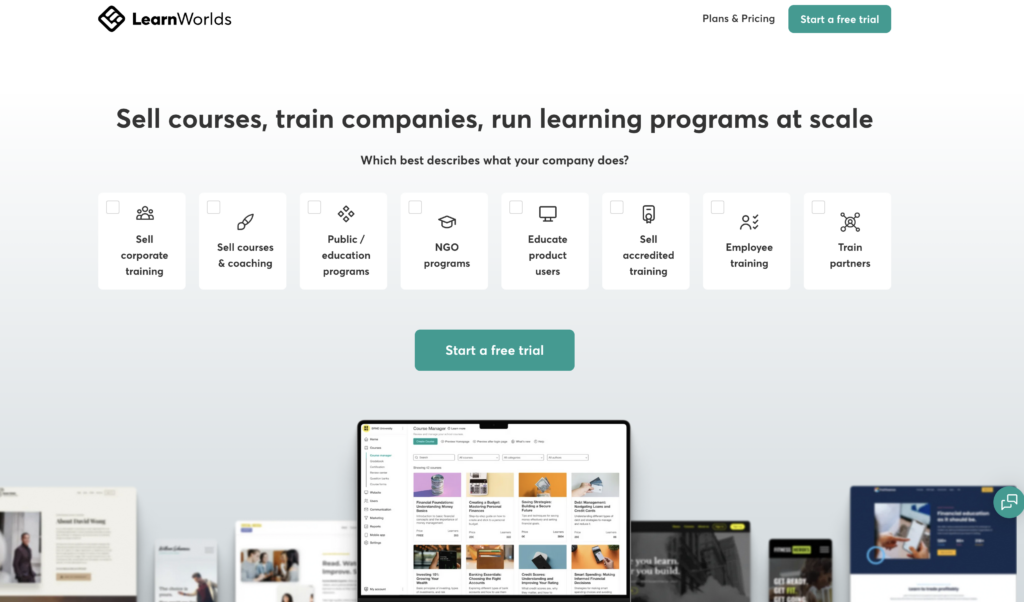
LearnWorlds focuses on interactive learning experiences with built-in video editing, ebooks, and assessment tools. The platform allows creators to add interactive elements directly to videos, including questions, links, and downloadable resources.
The starter plan begins at $29 per month but includes a $5 fee per course sale. The Pro Trainer plan at $99 per month removes transaction fees and adds advanced features like certificates and SCORM compliance.
The platform includes a white-label mobile app option for creators who want branded student experiences. LearnWorlds supports drip content, prerequisites, and conditional navigation to control course progression.
Built-in social features enable students to comment on lessons, participate in discussions, and complete assignments with peer interaction. The platform also offers live session integration through Zoom connections.
Prices Pro Trainer $99 | Learning Center $299 |
Thinkific
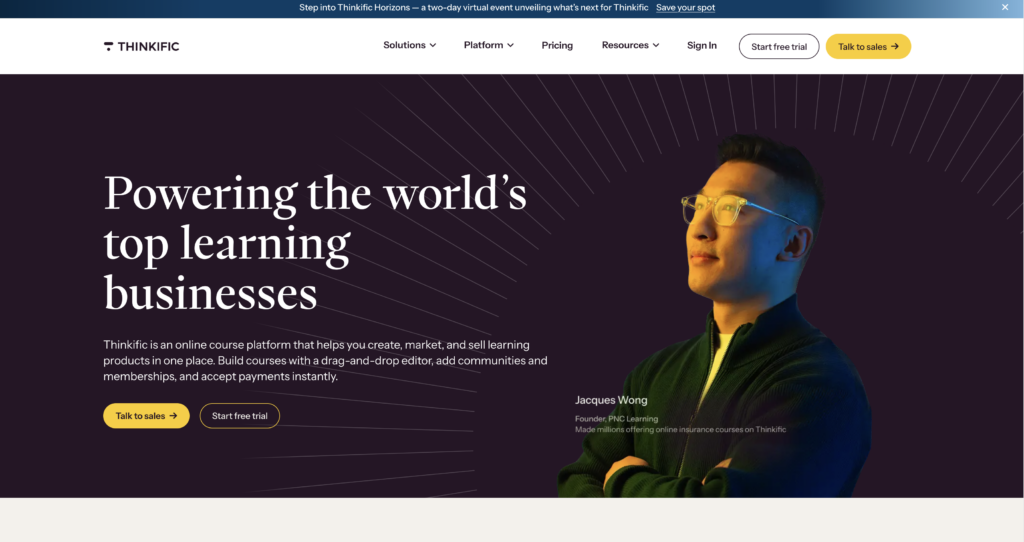
Thinkific offers a free plan that allows creators to launch unlimited courses with unlimited students, making it accessible for beginners testing the online course market. Paid plans start at $49 per month and add features like memberships, certificates, and priority support.
The course builder uses a drag-and-drop interface that requires minimal technical knowledge. Creators can upload videos, PDFs, audio files, and quizzes without coding skills.
Thinkific charges no transaction fees on any plan, allowing creators to keep more revenue from course sales. The platform integrates with popular payment processors including PayPal and Stripe.
Advanced plans include student reporting, assignments with file uploads, and community features. The platform also supports coupons, payment plans, and subscription-based pricing models for recurring revenue.
Teachable
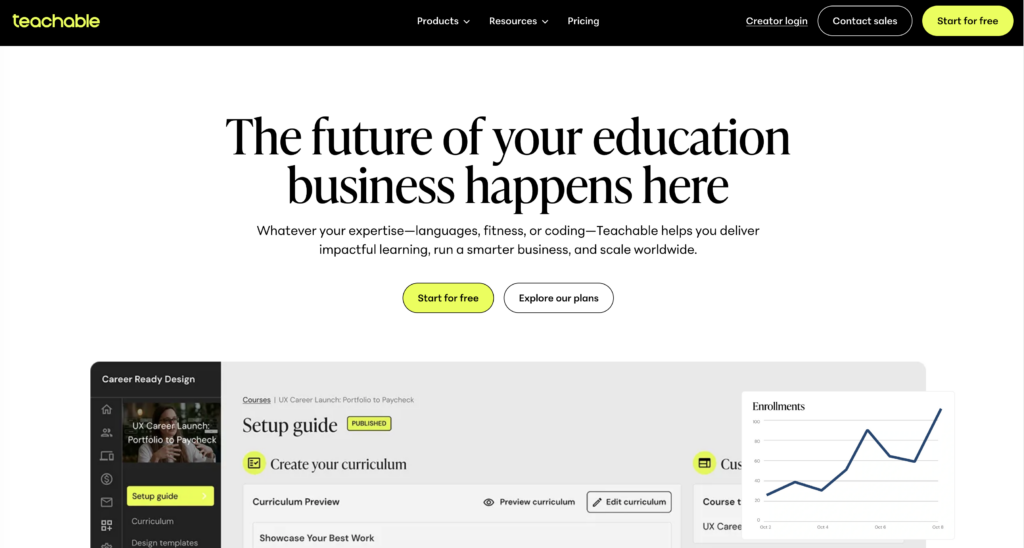
Teachable serves over 100,000 creators and emphasizes ease of use for course creation and student management. The basic plan starts at $59 per month with a 5% transaction fee, while the Pro plan at $159 per month eliminates transaction fees.
The platform provides customizable sales pages, checkout processes, and course players without requiring design skills. Creators can match their brand through color schemes, logos, and custom domains.
Teachable includes built-in affiliate marketing tools, allowing creators to recruit promoters who earn commissions on sales. The compliance features support VAT, sales tax collection, and EU data protection requirements.
Student engagement tools include quizzes, course completion certificates, and integrated coaching features for one-on-one interactions. The platform generates detailed reports on sales, enrollments, and student progress. Course creators can also create bundles, upsells, and order bumps to increase average transaction values.
WordPress LMS Plugins
WordPress site owners can transform their websites into course platforms using LMS plugins that integrate directly with their existing infrastructure. LifterLMS and LearnDash stand out as the two most established solutions for course creators working within the WordPress ecosystem.
LifterLMS
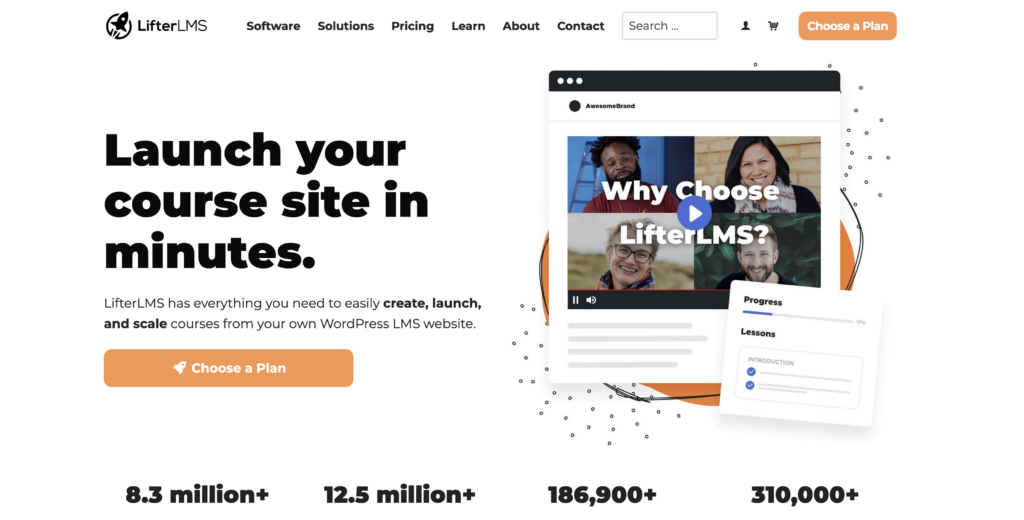
LifterLMS provides a free core plugin with optional paid extensions for advanced functionality. The base plugin includes course creation tools, lesson management, and basic quiz capabilities without requiring additional purchases.
Course creators can build drip content schedules, create membership tiers, and manage student enrollments through the main dashboard. The plugin supports multimedia lessons, assignments, and certificates upon course completion.
From a community perspective, LifterLMS has an add-on called Social Learning that facilitates a discussion forum for each course and membership that a user is enrolled in. It also creates a Timeline and Profile to match up to the Member Directory. This puts this LMS offering above the rest in this concentrated space.
Key features include:
- Native payment processing through Stripe integration
- Built-in engagement tools like gamification badges
- Student reporting and progress tracking
- Compatibility with popular page builders
The extension model allows creators to add specific features as their course business grows. Popular add-ons include affiliate programs, advanced video hosting, and email marketing integrations. LifterLMS works with most WordPress themes but performs best with themes designed for educational content.
LearnDash
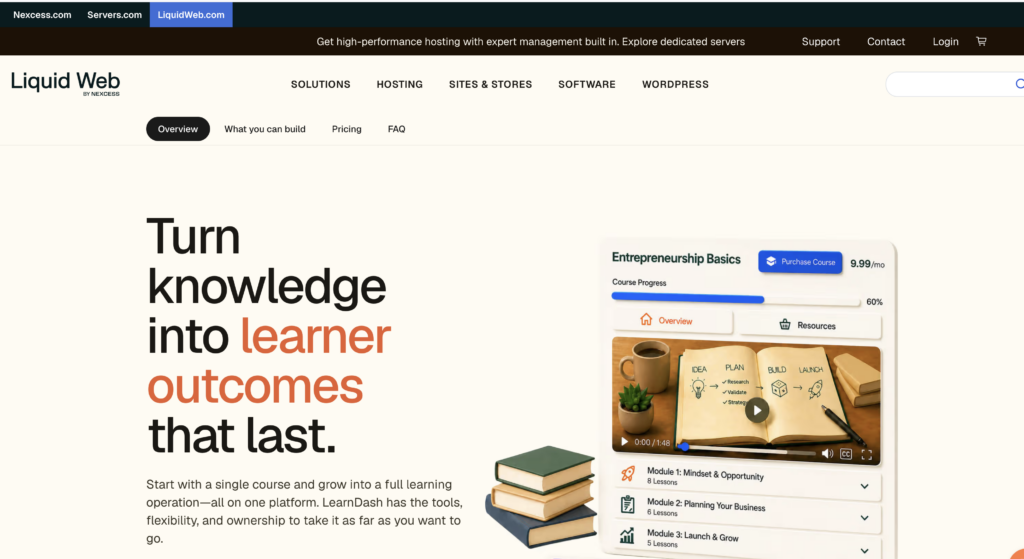
LearnDash operates on a premium-only model with annual licensing starting at $199. The plugin powers courses for Fortune 500 companies and major universities, offering enterprise-level features in a WordPress environment.
Course builders access a dedicated interface for drag-and-drop lesson organization. The platform supports advanced quiz types, including essay questions, fill-in-the-blank, and timed assessments with automatic grading.
Notable capabilities:
- Focus mode for distraction-free learning experiences
- Dynamic content delivery based on user progress
- ProPanel analytics dashboard for detailed insights
- Integration with WooCommerce, MemberPress, and major payment gateways
LearnDash includes built-in monetization options through one-time payments, subscriptions, and course bundles. The plugin handles large-scale implementations with thousands of students while maintaining performance standards. Course creators can white-label the student experience to match their brand identity.
Marketplace platforms connect instructors with massive existing audiences but take significant revenue shares and limit control over branding and student relationships.
Community Membership Platforms
Community membership platforms blend course delivery with social features, allowing creators to build engaged communities around their content. These platforms prioritize recurring revenue through memberships rather than one-time course sales.
Circle.co
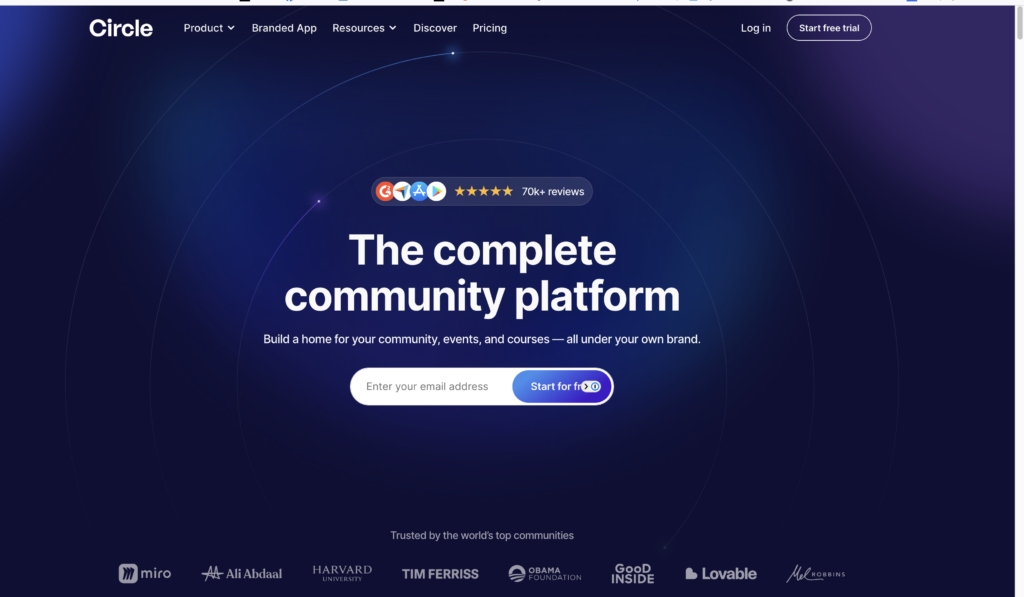
Circle.co specializes in community-first course delivery, combining discussion forums, live events, and course content in a unified interface. The platform charges $89 to $219 per month depending on member count and features needed.
Course creators can organize content into spaces, each functioning as a dedicated area for specific topics or membership tiers. Members interact through posts, comments, and direct messages while accessing courses structured in modules and lessons.
The platform includes native live streaming, event scheduling, and member directories. Integration with Stripe enables subscription billing and payment processing. Circle.co works well for creators who want community interaction to drive course engagement rather than treating community features as secondary.
Circle.so offers a mobile app for iOS and Android, allowing members to participate in discussions and access course content on their devices. The search functionality helps members quickly find relevant conversations and course materials.
Mighty Networks
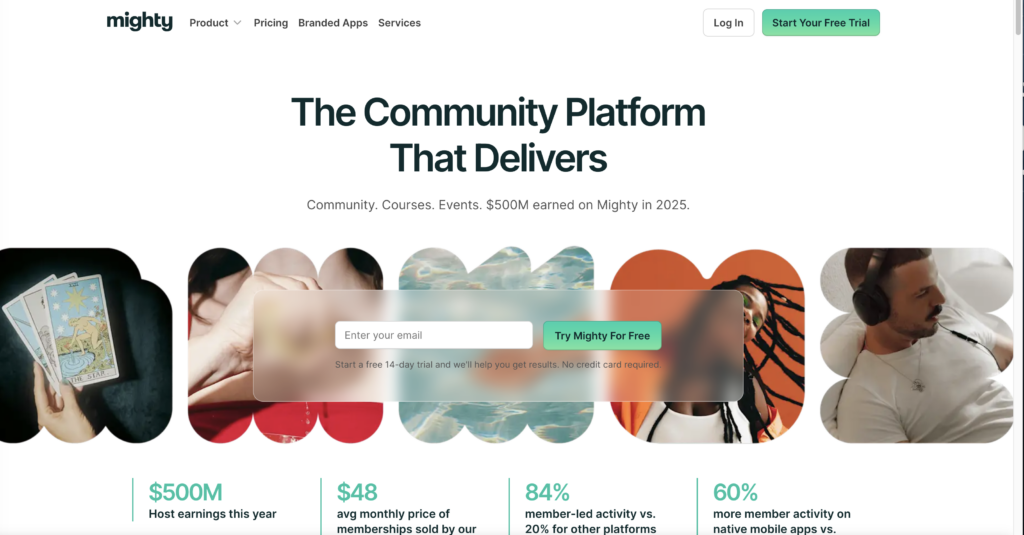
Mighty Networks positions itself as an all-in-one platform for courses, community, and memberships, with pricing ranging from $49 to $179 per month. The platform emphasizes social networking features alongside course delivery.
Creators can build multiple membership tiers, each with different access levels to courses, content, and community features. The platform supports threaded discussions, member profiles, and small group creation within the larger community.
Course content appears in dedicated sections with video lessons, text, and downloadable files. Mighty Networks includes polls, questions, and activities to boost engagement. The platform also offers white-label mobile apps for an additional fee, giving creators branded iOS and Android applications.
Payment processing happens through Stripe integration. Creators receive 100% of earnings minus payment processing fees. The platform supports one-time payments, subscriptions, and payment plans for flexible pricing strategies.
Fluent Community
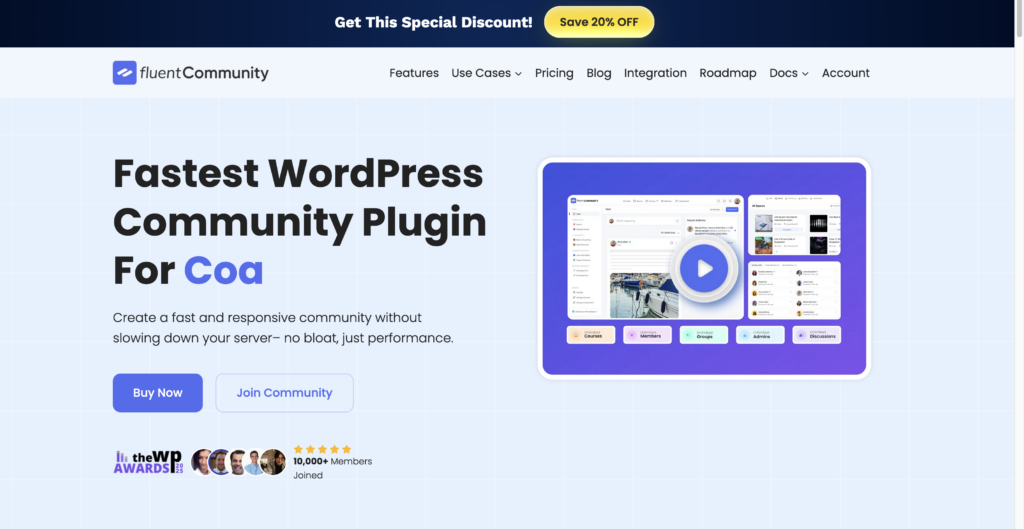
Fluent Community operates as a WordPress plugin, transforming WordPress sites into community-driven course platforms. Pricing starts at $147 annually for a single site license.
The plugin integrates with popular WordPress LMS solutions including LearnDash, LifterLMS, and TutorLMS. This integration connects course progress with community participation, unlocking features based on course completion.
Members create profiles, join groups, send private messages, and participate in activity feeds similar to social networks. The plugin includes gamification elements like points, badges, and leaderboards to encourage participation.
Fluent Community works within the WordPress ecosystem, allowing creators to use existing WordPress themes and plugins. This approach suits creators who already use WordPress and want to add community features without migrating to a new platform. The plugin receives regular updates and includes documentation for setup and customization.
Skool combines course hosting with community features, positioning itself as an all-in-one platform for creators who want to build engaged student communities. The platform centers around group-based learning experiences where discussions and course content exist in the same space.
The pricing structure is straightforward at $99 per month regardless of student count or revenue. Creators keep course sales minus payment processing fees, which is more favorable than traditional marketplaces.
Key Features:
- Integrated community forums and course content
- Gamification elements including leaderboards
- Mobile app for students
- Calendar and event scheduling
- No transaction fees beyond payment processing
BuddyBoss
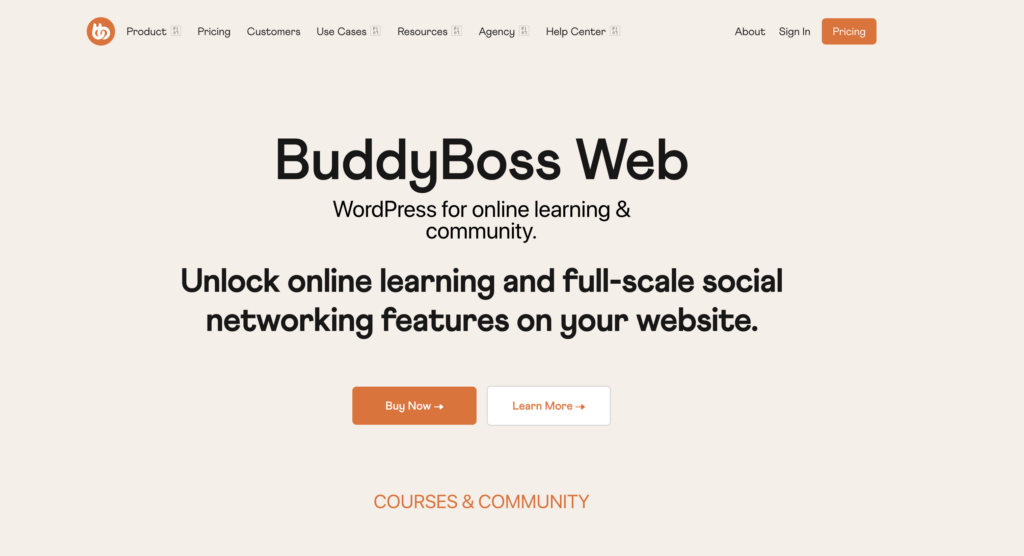
BuddyBoss provides a WordPress theme and plugin combination designed for online courses with integrated social networking. The platform costs $228 to $996 annually depending on the license type and included features.
The software works with LearnDash to create course-focused communities. Course content sits alongside social profiles, activity feeds, groups, and messaging features. Members can follow each other, share updates, and collaborate within topic-specific groups.
BuddyBoss includes mobile apps for iOS and Android as part of higher-tier plans. These apps maintain full functionality including course access, community participation, and messaging. The platform supports live streaming, video uploading, and media galleries.
Internal Training LMS Platforms
Organizations need specialized platforms to train employees, partners, and customers effectively. These internal-focused LMS solutions prioritize user management, compliance tracking, and enterprise-grade security over public course marketplaces.
Absorb LMS
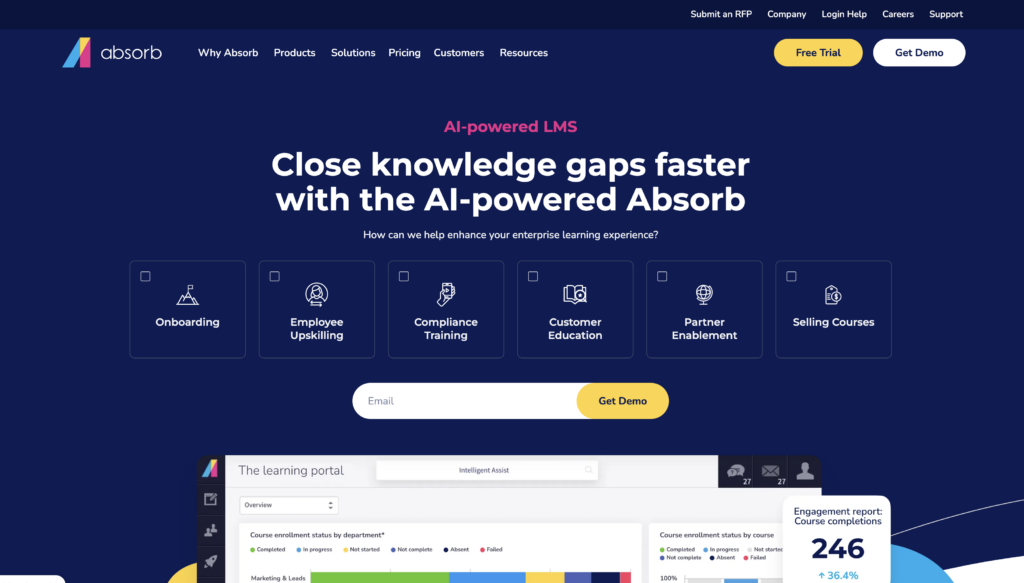
Absorb LMS serves enterprise clients with its cloud-based platform designed for employee training and development. The system handles complex organizational structures with its advanced user hierarchy management and automated enrollment features.
The platform offers detailed analytics dashboards that track completion rates, assessment scores, and individual learning paths. Administrators can generate compliance reports for regulatory requirements and monitor training effectiveness across departments.
Key features include:
- AI-powered course recommendations
- Multi-language support for global teams
- SCORM and xAPI compliance
- Mobile learning apps for iOS and Android
- Integration with HRIS systems
Pricing starts at $800 per month for up to 1,000 active users. The platform charges based on active learners rather than total registered users, which helps organizations control costs.
LearnWorld
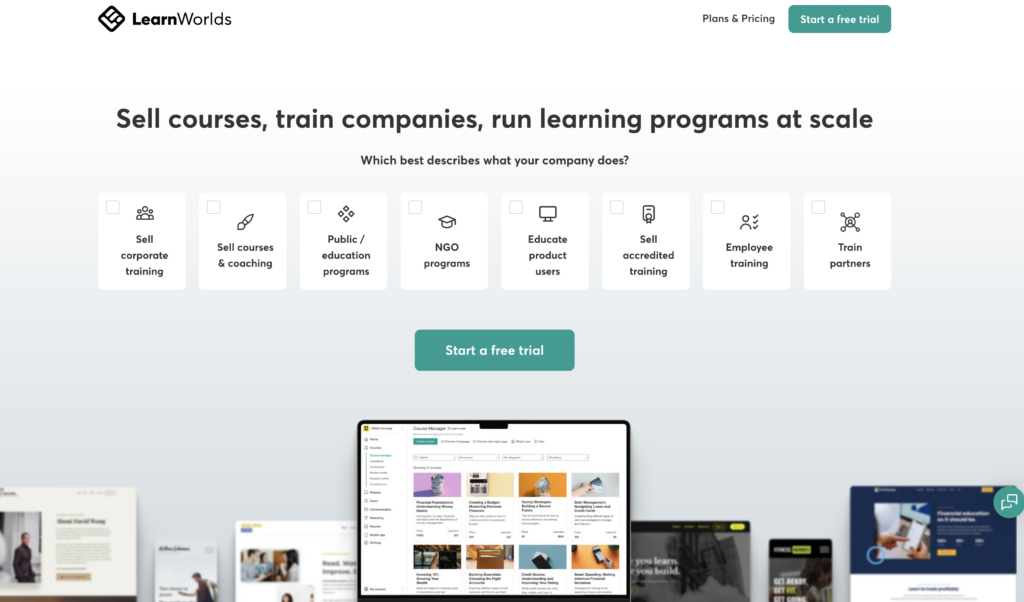
LearnWorld caters to businesses building branded training academies for customers and employees. The platform provides white-label options that remove LearnWorld branding entirely from the learning environment.
Interactive video capabilities let trainers add questions, pop-ups, and clickable elements directly within video content. The platform tracks video engagement metrics, showing which segments learners rewatch or skip.
The built-in social learning features include course discussions, learner profiles, and collaborative assignments. LearnWorld also offers a dedicated mobile app builder so organizations can publish branded training apps.
Monthly plans range from $24 to $249 based on features and active users. Annual subscriptions receive a 20% discount, and custom enterprise pricing accommodates larger organizations with specific requirements.
How to Choose the Right Online Community Platform
Selecting the right platform requires careful evaluation of specific business needs and technical requirements. Community facilitators should start by identifying their primary goals and the options to add course delivery to their plans. Whether that’s reaching a broad audience through a marketplace or maintaining full control with a self-hosted solution.
Key factors to consider include:
- Pricing structure – Monthly fees, transaction costs, or free options with limited features
- Technical capabilities – Video hosting, quiz builders, drip content, and mobile compatibility
- Marketing tools – Email integration, sales pages, affiliate programs, and SEO features
- Payment processing – Supported gateways, currency options, and payout schedules
- Student experience – Interface design, course navigation, and community features
Platform type matters significantly. Marketplaces like Udemy provide built-in traffic but take higher commissions and limit pricing control. Another major downside of marketplace-type options is the insane amount of spam you receive as a creator. Bottom feeders in the digital marketing space are consistently spamming creators in search of an easy mark for inflated marketing or sales fees. Avoid this at all costs.
Self-hosted platforms offer complete ownership but require more marketing effort in the actual building and maintaining of the platform. Personally, when I weigh the extra work of SPAM, and having to conform to thier templated offer in SAAS, against the extra setup in WordPress that grants ownership and development freedom… WordPress wins every time.
| Platform Type | Best For | Trade-off |
|---|---|---|
| Marketplace | New creators seeking visibility | Lower revenue per sale |
| All-in-one | Creators wanting simplicity | Monthly subscription costs |
| WordPress LMS | Those with existing websites | Technical setup required |
| Standalone | Established course businesses | Higher upfront investment |
Creators should test platforms through free trials before committing. Most services allow migration, but moving courses between platforms involves significant work. The right choice depends on budget, technical skill, existing audience size, and long-term business objectives.
Support quality and documentation accessibility also impact success rates for new course creators.
Frequently Asked Questions
Selecting the right platform depends on business goals, budget, technical requirements, and desired control over pricing and student data. Different platforms excel in specific areas like ease of use, marketing tools, customization, or revenue models.
Which platform is best for creating, hosting, and selling online courses in 2026?
The best platform depends on specific business needs and technical expertise. Kajabi offers the most comprehensive all-in-one solution with built-in marketing automation, email campaigns, and sales funnels, making it ideal for creators who want everything in one place and are satisfied with the format Kajabi provides.
Teachable provides a balance of features and affordability with strong course delivery tools and payment processing. Thinkific excels in customization options and offers a robust free plan that supports unlimited students. But if the focus of your project is Community, you may look further.
For creators with existing WordPress sites, LearnDash or LifterLMS integrate directly into their current infrastructure. Podia works well for creators selling courses alongside memberships and digital downloads.
What should I look for when choosing an online learning platform that supports certificates?
Certificate features vary widely across platforms. Course creators should verify whether certificates are customizable with branding, logos, and specific completion criteria.
Most platforms allow creators to add student names and course titles to certificates automatically. Advanced platforms let creators set completion requirements like quiz scores, assignment submissions, or minimum video watch time before issuing credentials.
Some platforms include certificate verification features that allow employers or institutions to confirm authenticity through unique codes or URLs. Thinkific, Teachable, and LearnDash all offer certificate customization on paid plans, while Kajabi includes it in all tiers.
Which free options are most reliable for building and delivering an online course without upfront costs and Community Options?
Thinkific’s free plan stands out as the most comprehensive option with unlimited courses and students, basic quizzes, and course completion certificates. The platform takes no transaction fees and allows creators to use custom domains.
Teachable offers a free plan but charges a $1 plus 10% transaction fee on all sales. It includes basic course creation tools and student management but limits access to features like drip content and course completion certificates.
Google Classroom remains free for educators and handles basic course delivery but lacks payment processing and advanced marketing features. WordPress with free plugins like LearnPress provides self-hosted options but requires more technical knowledge to set up and maintain.
However, when it comes to free core plugins, it is hard to beat the LifterLMS offering as it comes with both Membership Management and Course Creation tools. When your project is ready to integrate community tools, LifterLMS is ripe for upgrades or integration.